Kimchi fried rice
Chop 100 g kimchi, sauté in oil for 3 minutes, then add 200 g cooked rice and stir-fry until hot throughout.
KIMCHI / Autumn
Napa Cabbage Kimchi
배추김치Baechu Kimchi
Salted napa cabbage leaves are layered with seasoned radish. Crisp white stems and tender leaves make each bite a little different.
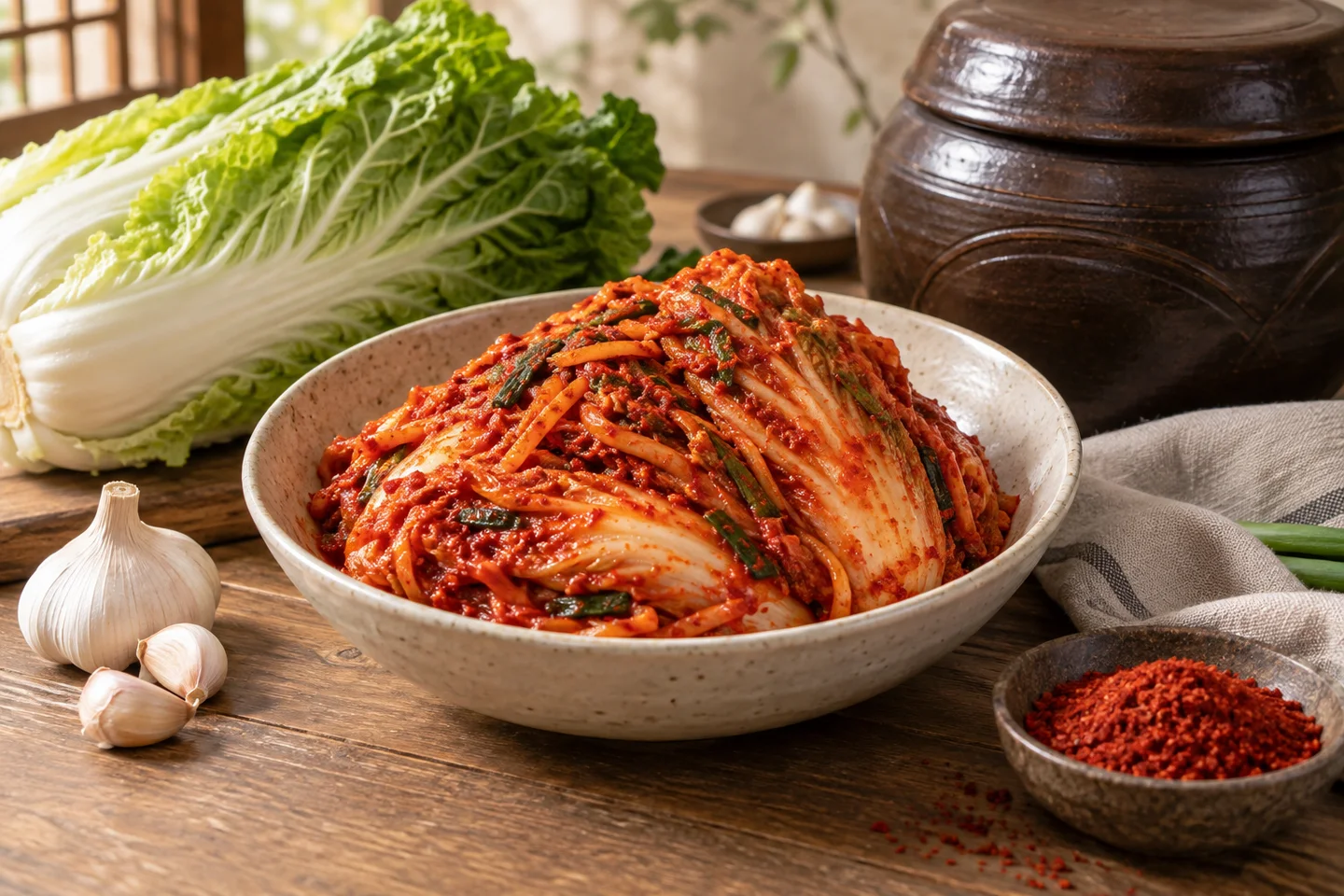
HOW TO MAKE BAECHU KIMCHI
Household methods vary. These are small-batch home examples for refrigerated handling; salting times depend on the vegetables.
Wash hands and utensils; remove damaged outer leaves. Quarter or halve the cabbage lengthwise and rinse between leaves. Julienne the radish and cut scallions into 4 cm lengths.
Dissolve 40 g salt in 1 L water and wet the cabbage. Distribute the other 40 g between thick stems. Start checking within 2–4 hours, turning midway, until stems bend rather than snap. Rinse 2–3 times and drain at least 30 minutes. In hot conditions, salt under refrigeration and allow longer.
Stir the rice flour and water over low heat until thickened, then cool completely. Mix in gochugaru, fish sauce, garlic, ginger and sugar; fold in radish and scallions.
With food-safe gloves, spread a thin layer of filling between the leaves. Fold an outer leaf around each piece, pack into the container and press gently to reduce large air pockets.
These small-batch guides use refrigeration immediately after mixing. Pack into a clean food-safe container, leave headspace and let the flavor develop at 4°C or below. The pace varies with ingredients, salt and temperature. Bubbles, sourness or elapsed days alone cannot establish safety.
Keep refrigerated and label the preparation date. Use clean utensils to take out a serving; do not return it to the container. If mold or spoilage is suspected, discard without tasting or trying to rescue it by cooking. These home guides are not validated processes for long-term preservation or room-temperature storage.
Measure trimmed weight rather than counting cabbages. Under-salted stems stay rigid; excess rinse water makes the seasoning watery.
TEMPERATURE · TIME · CARE
Kimchi continues to change slowly in the refrigerator. One room-temperature schedule or shelf life does not fit every batch. These are basic handling principles; refrigeration does not eliminate every risk.
For watery kimchi, use a food-safe weight to keep vegetables below the liquid. Leave headspace for gas and follow the instructions for your fermentation container.
KIMCHI AT YOUR TABLE
Chop 100 g kimchi, sauté in oil for 3 minutes, then add 200 g cooked rice and stir-fry until hot throughout.
Sauté 150 g kimchi until heated through and serve with 200 g warmed tofu.
Use only kimchi that has been stored in sound condition. Cooking cannot rescue spoiled kimchi.
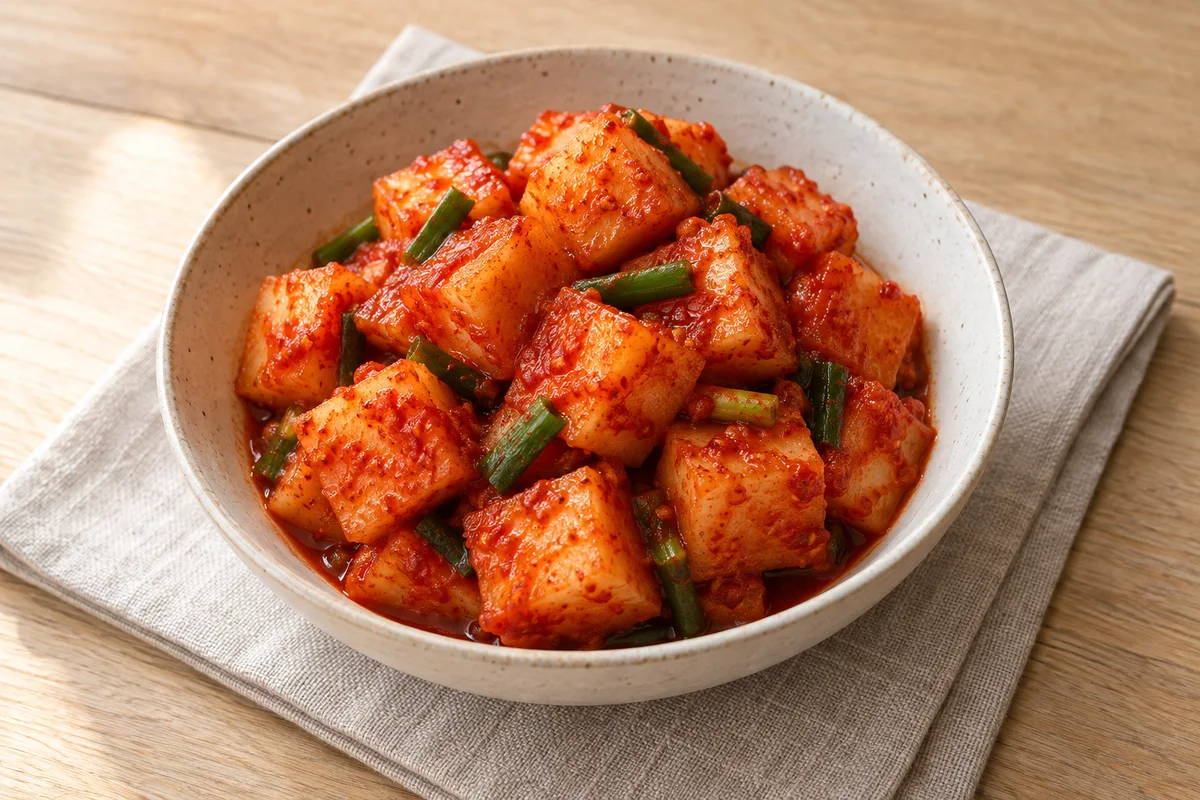
Autumn
Cubed Radish Kimchi
깍두기Bite-size radish cubes bring a juicy crunch and a gentle sweetness beneath the red pepper seasoning. A familiar companion to Korean soups.
How to make it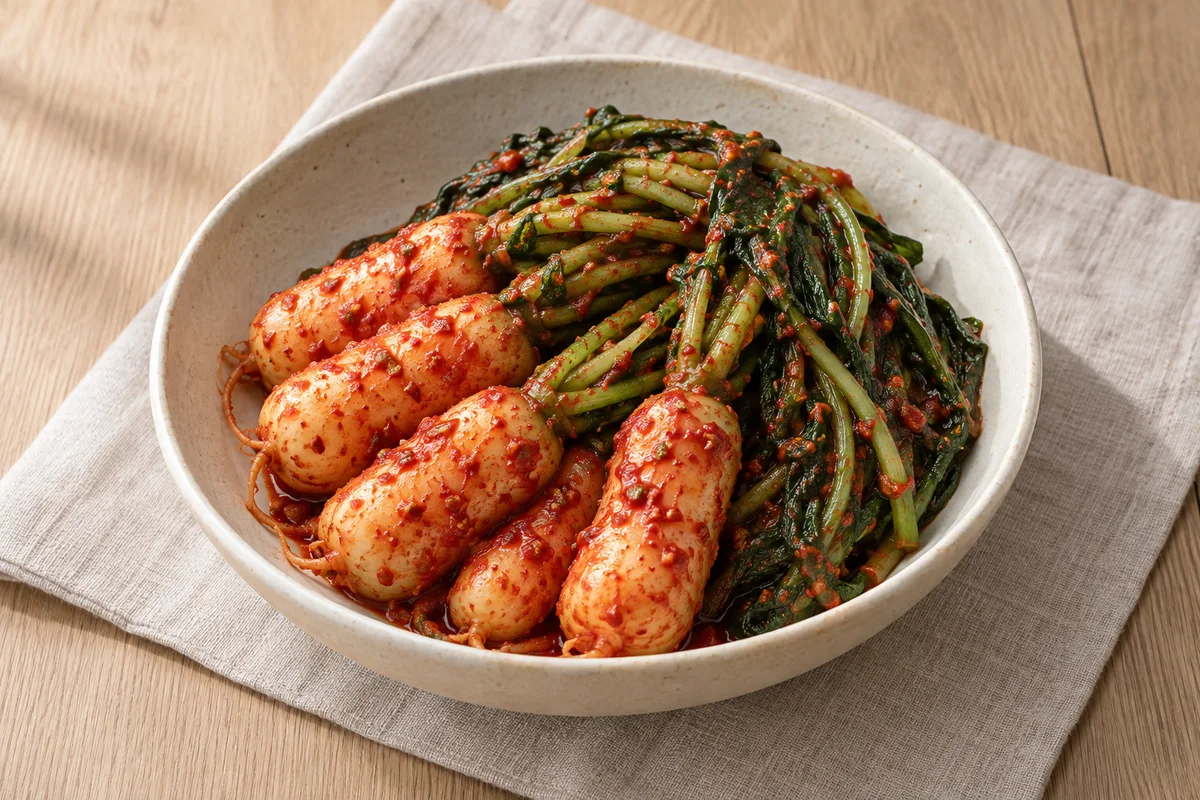
Autumn
Ponytail Radish Kimchi
총각김치Small ponytail radishes are kept with their leafy tops. The firm roots and chewy greens offer two textures in one kimchi.
How to make it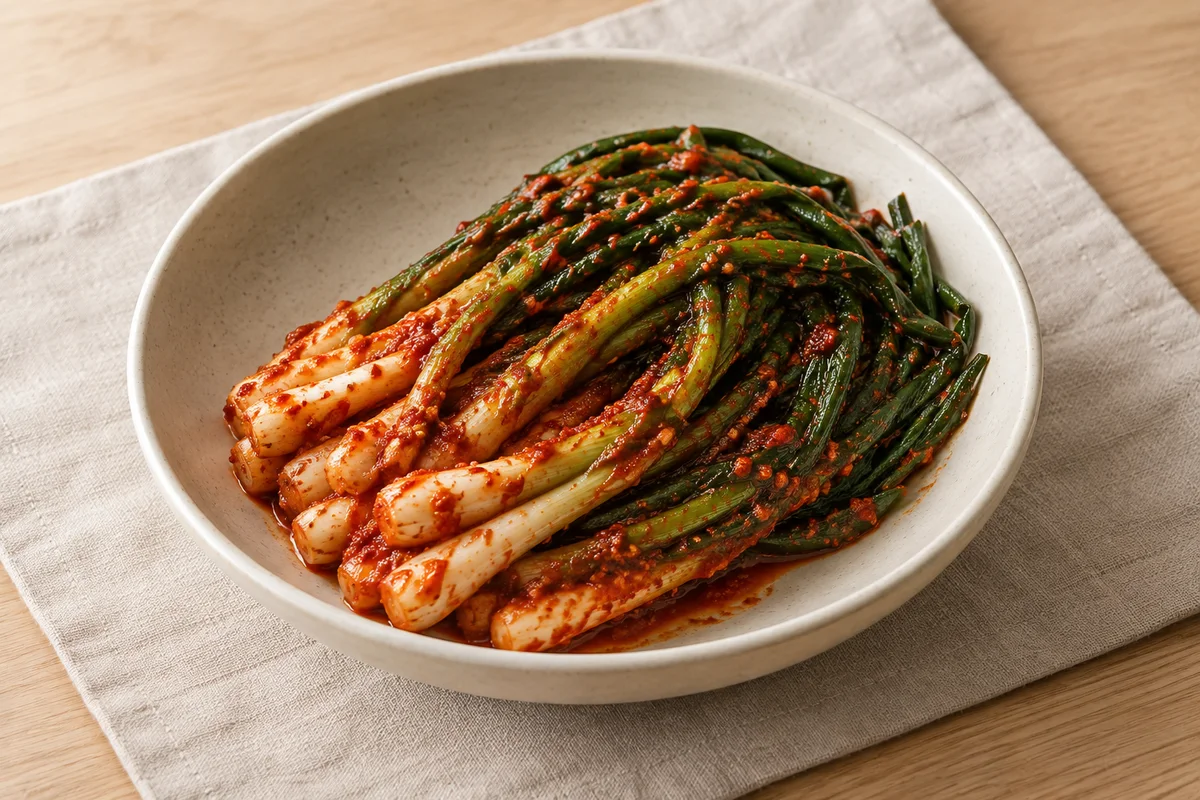
Spring
Green Onion Kimchi
파김치Whole slender scallions keep their fragrant character, balancing pungent white bases with tender green leaves.
How to make it