Autumn
Baechu Kimchi
Napa Cabbage Kimchi
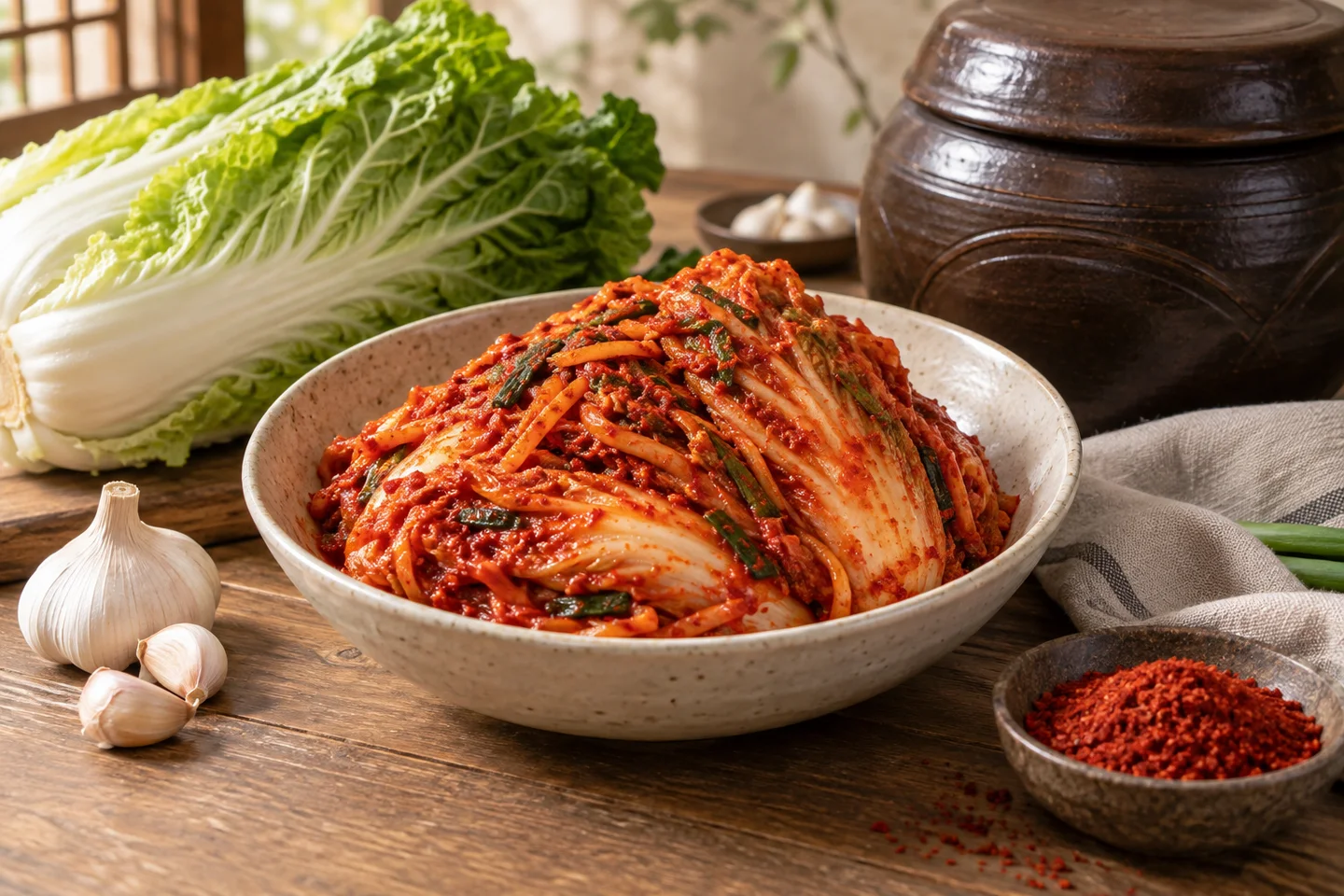
배추김치Salted napa cabbage leaves are layered with seasoned radish. Crisp white stems and tender leaves make each bite a little different.
How to make itKorean fermentation & food culture
Korea’s distinctive fermented food, carrying the seasons and the food traditions of families.
From a head of napa cabbage to a bowl of clear dongchimi, learn the names, discover the flavors and begin with a small batch.
What is Kimchi?
Kimchi is a Korean food made by salting and seasoning vegetables such as cabbage, radish and scallions, then allowing fermentation. Ingredients, regions and households shape the result. Some varieties contain no red pepper at all.
Kimjang is the shared practice of making and giving kimchi. The late-autumn preparations bring seasonal produce together with knowledge passed through families.
Read about kimjang · UNESCO ↗Types of Kimchi
Keep the Korean names, and use the ingredients and flavors to find your way.
Autumn
Napa Cabbage Kimchi
배추김치Salted napa cabbage leaves are layered with seasoned radish. Crisp white stems and tender leaves make each bite a little different.
How to make it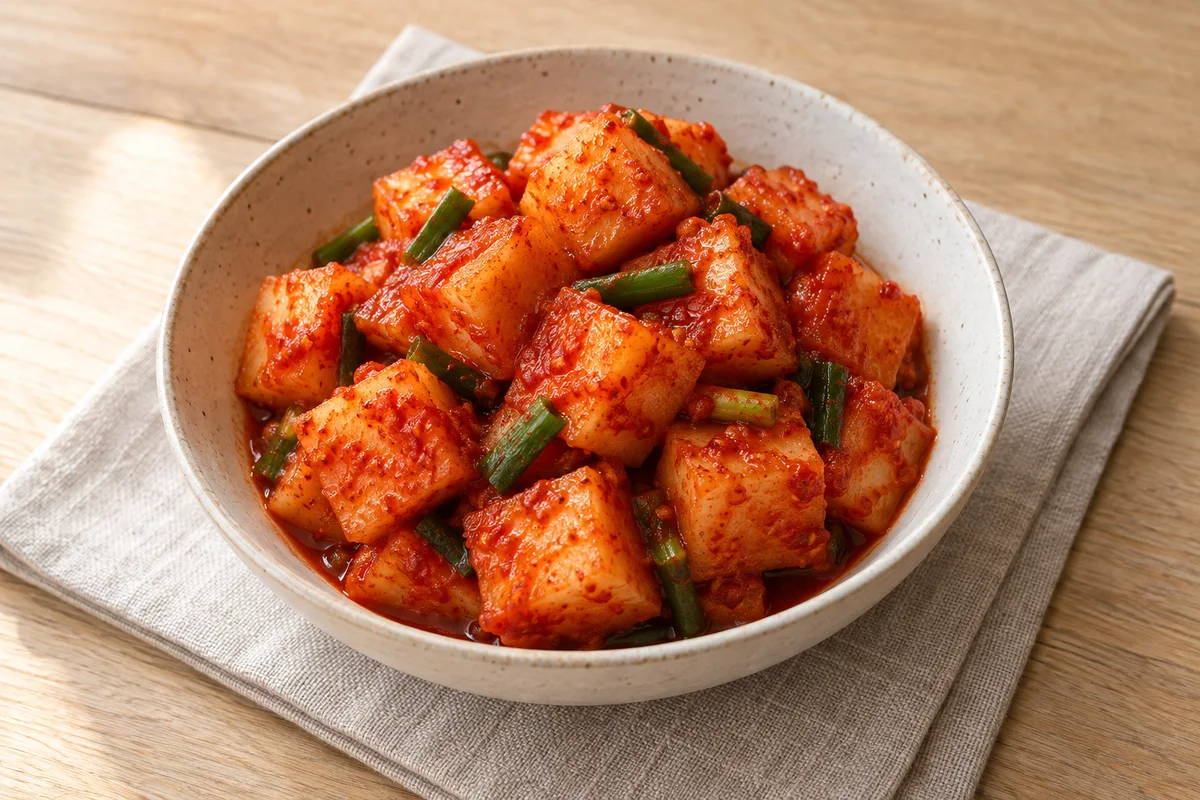
Autumn
Cubed Radish Kimchi
깍두기Bite-size radish cubes bring a juicy crunch and a gentle sweetness beneath the red pepper seasoning. A familiar companion to Korean soups.
How to make it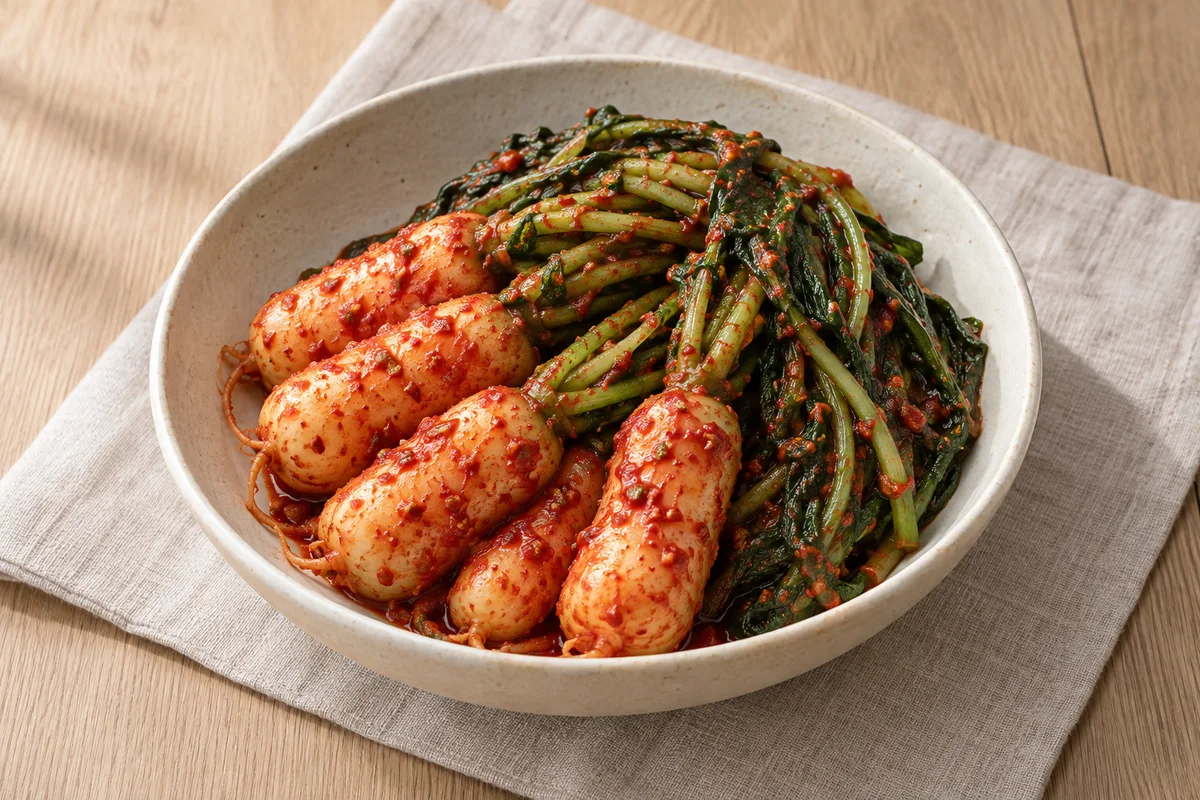
Autumn
Ponytail Radish Kimchi
총각김치Small ponytail radishes are kept with their leafy tops. The firm roots and chewy greens offer two textures in one kimchi.
How to make it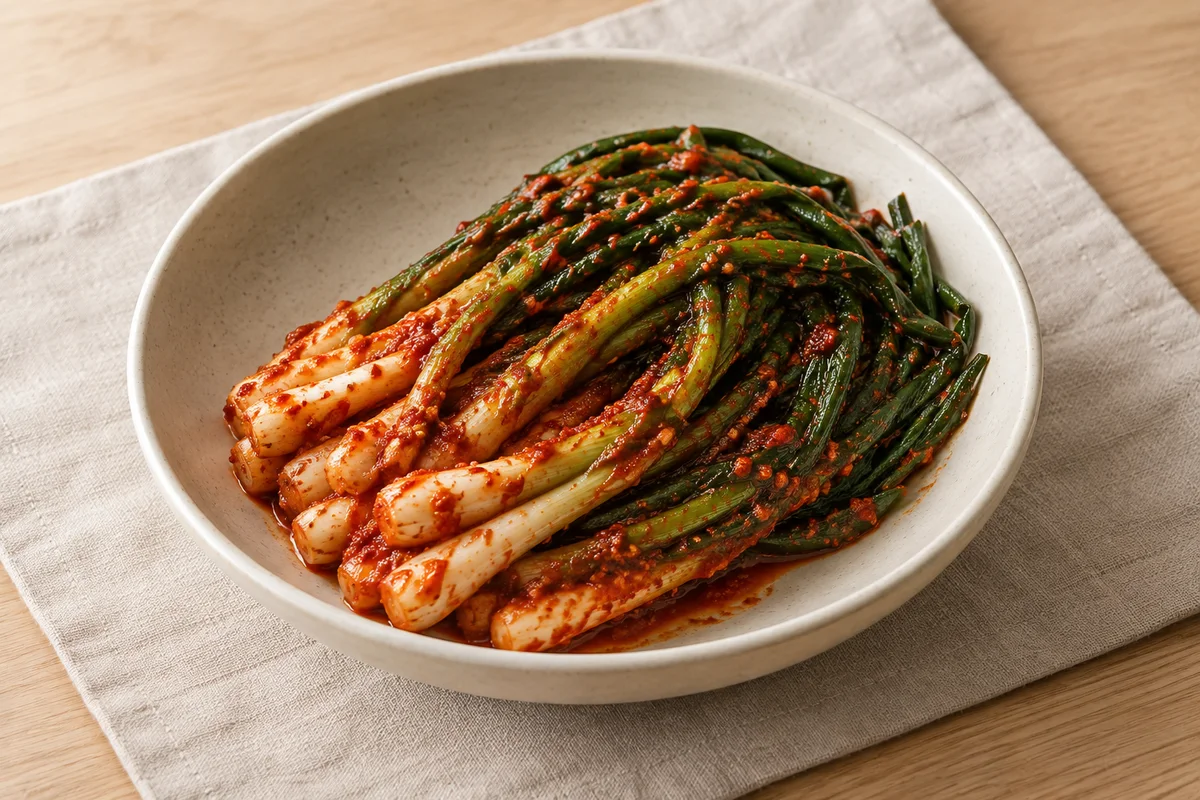
Spring
Green Onion Kimchi
파김치Whole slender scallions keep their fragrant character, balancing pungent white bases with tender green leaves.
How to make it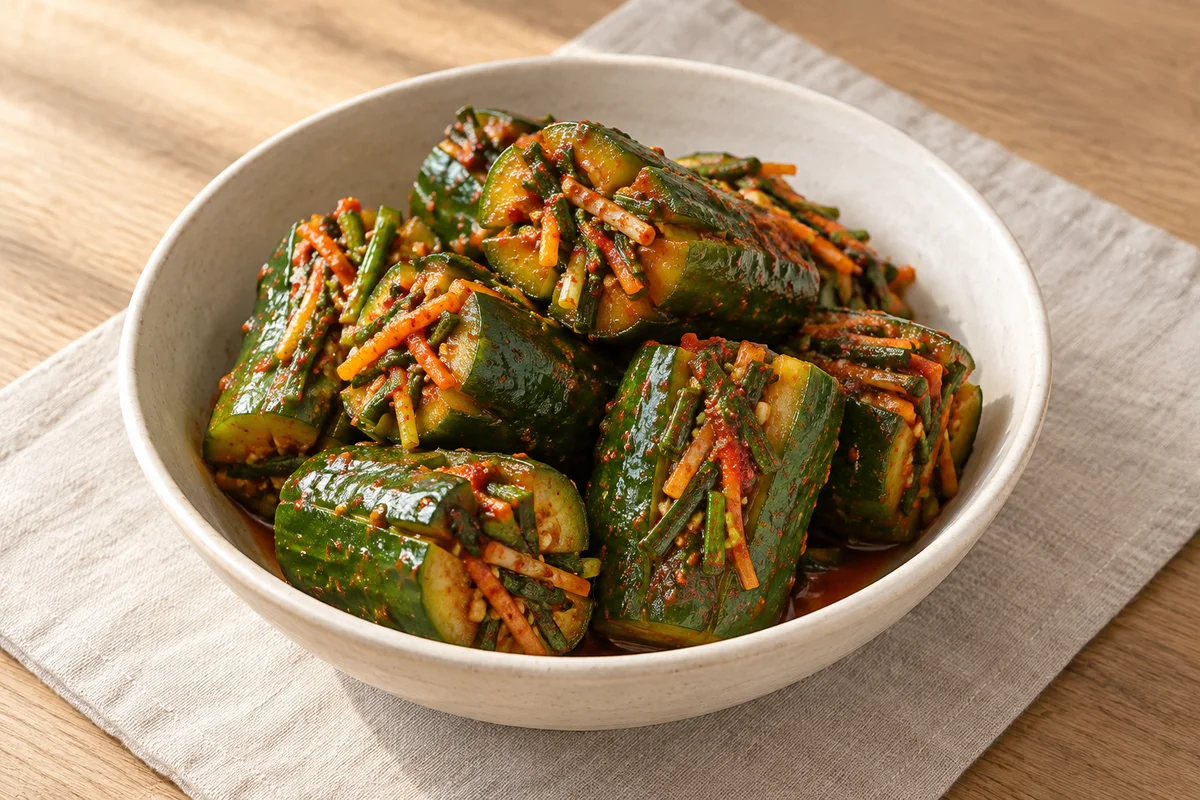
Summer
Stuffed Cucumber Kimchi
오이소박이Cucumbers are slit and filled with seasoned chives. Their crisp skin and juicy centers make a refreshing summer kimchi.
How to make it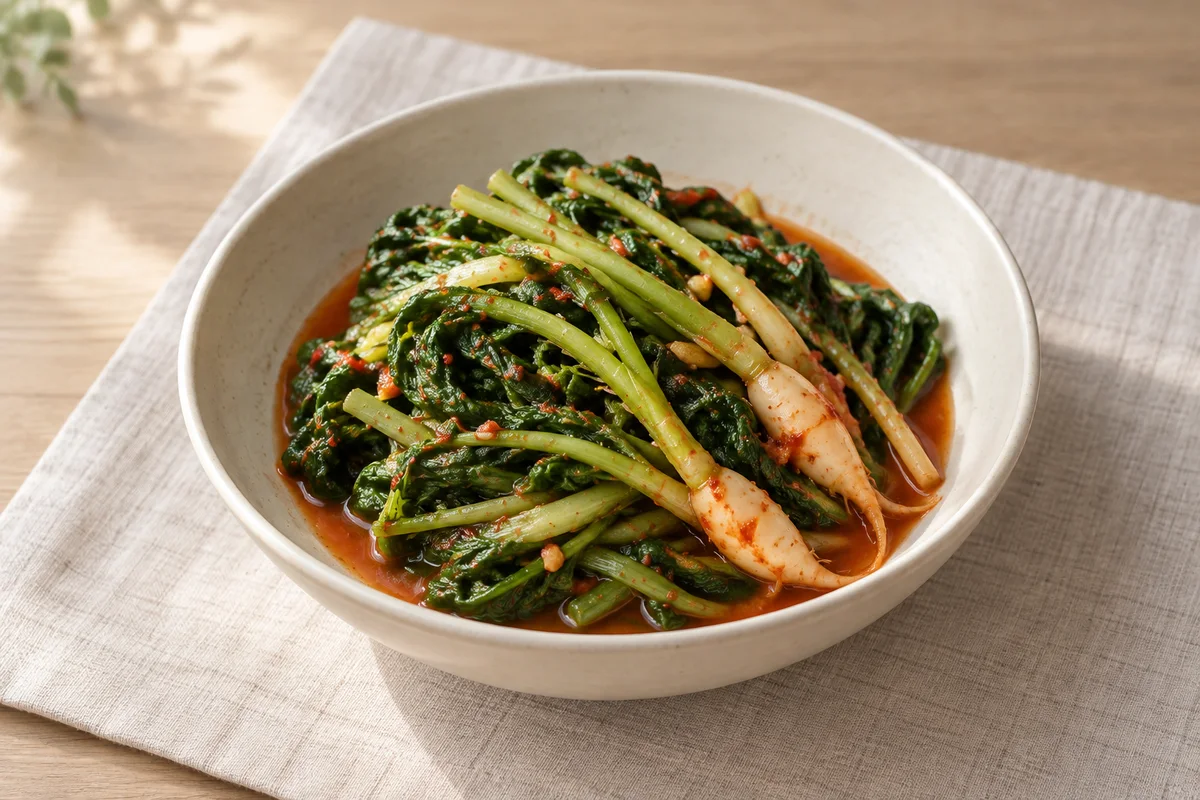
Summer
Young Radish Greens Kimchi
열무김치Tender young radish leaves and stems are dressed in a light seasoning with a little liquid. A natural match for rice bowls and noodles.
How to make it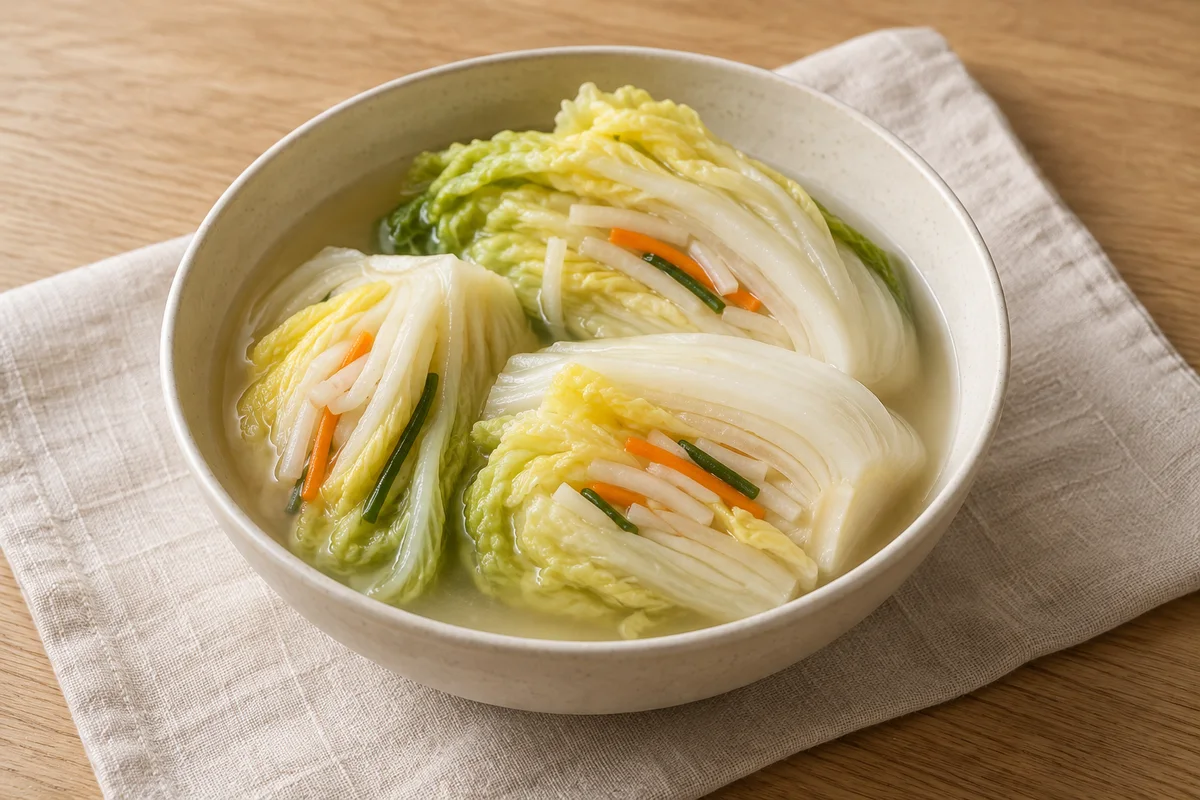
Autumn
White Napa Cabbage Kimchi
백김치Made without red pepper powder, this kimchi lets cabbage and pear bring a subtle sweetness. Enjoy the vegetables between the leaves and the clear liquid together.
How to make it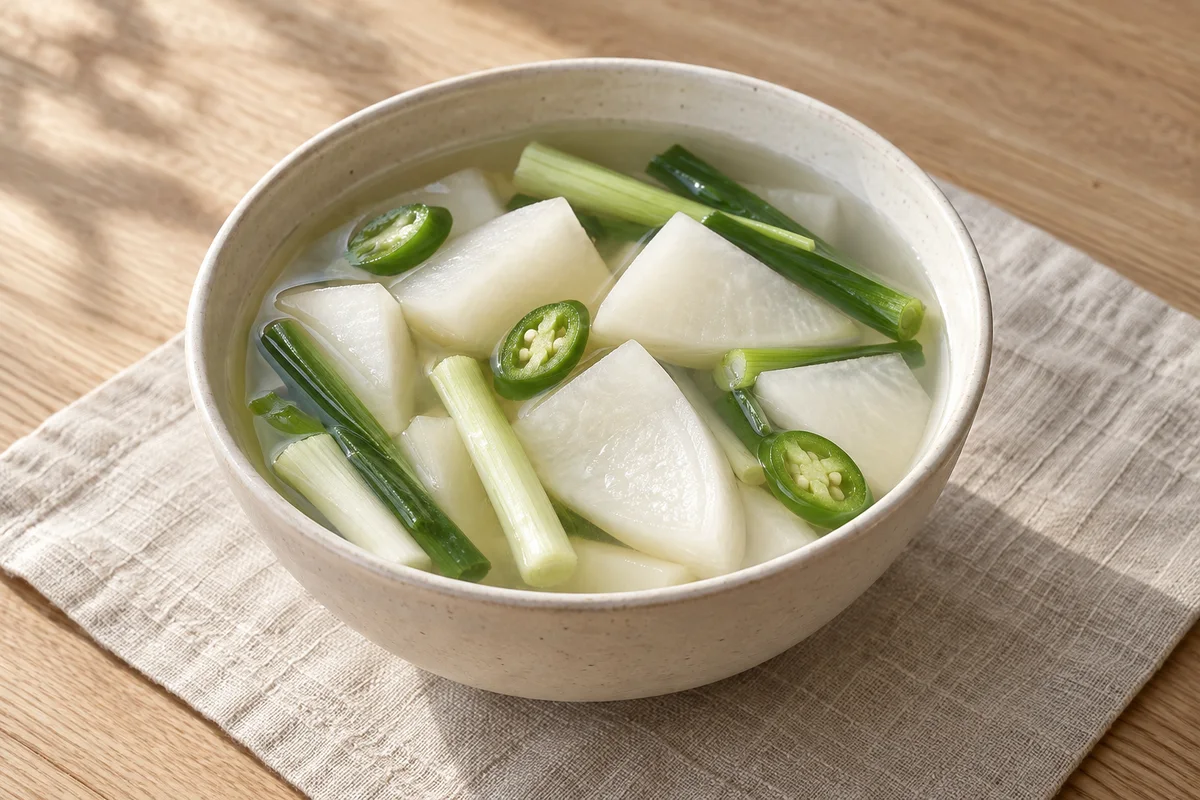
Winter
Radish Water Kimchi
동치미Radish is held in clear brine, with the liquid enjoyed alongside the crisp pieces. This small-batch version uses cut radish for a home refrigerator.
How to make itKimchi Basics
Clean your hands, knives, boards and containers. Remove soil and damaged leaves, and wash vegetables with drinking-quality water.
Weigh vegetables after trimming and use a scale for salt. A spoonful varies in weight with crystal size.
Use food-safe containers suited to acidic foods and leave headspace. Several small containers can be easier to serve from than one large tub.
Fish sauce contains fish. Check ingredient and allergen labels on packaged seasonings.
How to Make Kimchi
Learn the shared sequence, then follow the quantities and salting method for your chosen kimchi.
Choose fresh vegetables, wash, weigh and trim them.
Use the specified salting method and check whether rinsing is required.
Measure and combine seasonings. Cool cooked rice paste completely.
Gently mix or fill the vegetables, then pack into the container.
These guides refrigerate immediately for slow flavor development.
Maintain refrigeration and use clean utensils to remove a serving.
Seasonal Kimchi
These suggestions follow Korean seasons. Local harvests and ingredient availability may differ.
Kimchi Ingredients
Choose firm vegetables without wilted leaves. Moisture and size affect salting.
The basis of salting and seasoning. Even coarse salt should be measured by weight.
Korean red pepper flakes bring color and heat. They are different from a blended chili seasoning.
Adds savory depth and salt. Check the fish ingredients and allergens; changing it also changes salinity.
They shape the aroma. Take care with ginger quantities in a small batch.
Helps seasoning cling to vegetables. Cook glutinous rice flour with water and cool before using.
Storage & Fermentation
These small-batch guides use refrigeration immediately after mixing. Pack into a clean food-safe container, leave headspace and let the flavor develop at 4°C or below. The pace varies with ingredients, salt and temperature. Bubbles, sourness or elapsed days alone cannot establish safety.
Keep refrigerated and label the preparation date. Use clean utensils to take out a serving; do not return it to the container. If mold or spoilage is suspected, discard without tasting or trying to rescue it by cooking. These home guides are not validated processes for long-term preservation or room-temperature storage.
TEMPERATURE · TIME · CARE
Kimchi continues to change slowly in the refrigerator. One room-temperature schedule or shelf life does not fit every batch. These are basic handling principles; refrigeration does not eliminate every risk.
For watery kimchi, use a food-safe weight to keep vegetables below the liquid. Leave headspace for gas and follow the instructions for your fermentation container.
Kimchi Recipes
Baechu Kimchi
Chop 100 g kimchi, sauté in oil for 3 minutes, then add 200 g cooked rice and stir-fry until hot throughout.
Ways to cook with it →Yeolmu Kimchi
Top 200 g rice with 80 g chopped yeolmu kimchi and a cooked egg, then mix with a little sesame oil.
Ways to cook with it →Dongchimi
Top cold-rinsed cooked noodles with sliced radish. Mix a serving of dongchimi liquid with chilled noodle broth to taste and eat immediately.
Ways to cook with it →Use only kimchi that has been stored in sound condition. Cooking cannot rescue spoiled kimchi.