Dongchimi noodles
Top cold-rinsed cooked noodles with sliced radish. Mix a serving of dongchimi liquid with chilled noodle broth to taste and eat immediately.
KIMCHI / Winter
Radish Water Kimchi
동치미Dongchimi
Radish is held in clear brine, with the liquid enjoyed alongside the crisp pieces. This small-batch version uses cut radish for a home refrigerator.
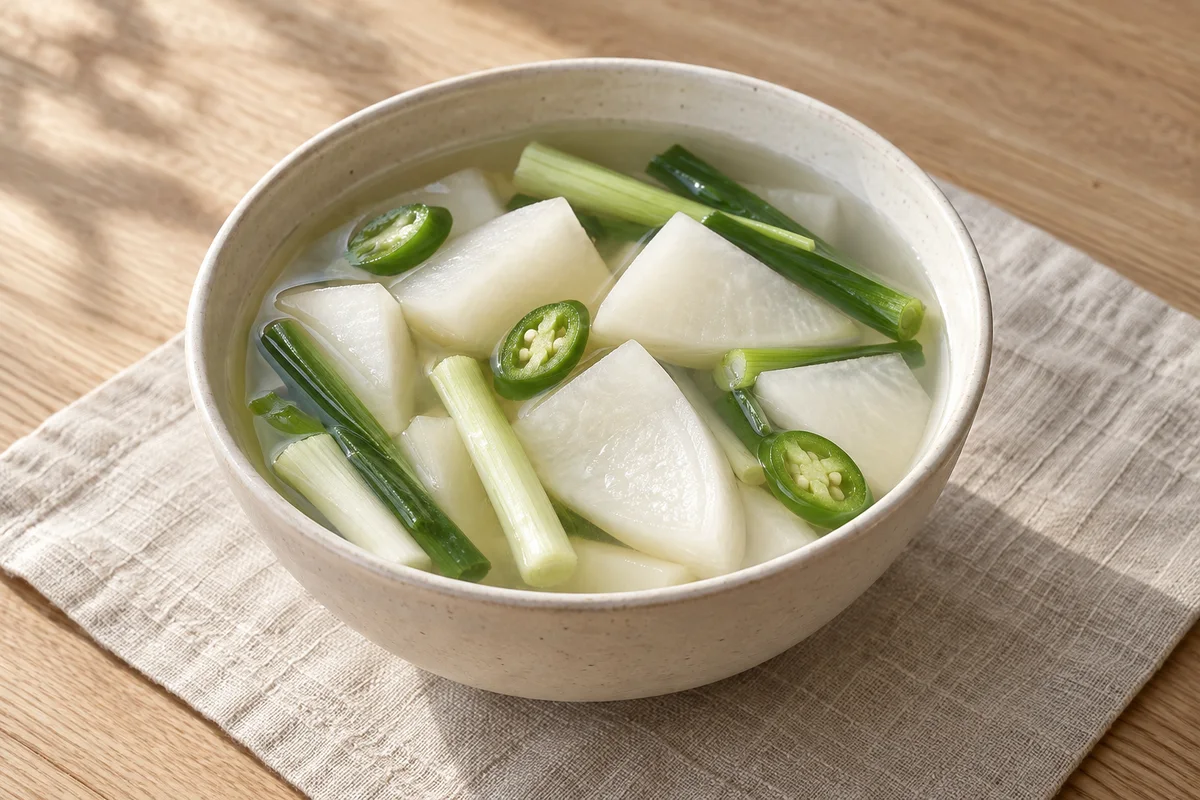
HOW TO MAKE DONGCHIMI
Household methods vary. These are small-batch home examples for refrigerated handling; salting times depend on the vegetables.
Scrub radish, peel rough areas and cut into 3–4 cm pieces. Core and thickly slice the pear; wash scallions and chili.
Coat radish evenly with 25 g salt and leave for 1 hour, turning halfway. Do not rinse; retain the released liquid for the brine.
Dissolve 35 g salt in 1.5 L drinking water. Put sliced garlic and ginger into a food-safe infusion bag. This is a clear brine rather than a red seasoning paste.
Add radish with its released liquid, pear, scallions, chili and the aromatic bag to a container. Pour in brine, keep solids submerged with a food-safe weight and leave headspace.
These small-batch guides use refrigeration immediately after mixing. Pack into a clean food-safe container, leave headspace and let the flavor develop at 4°C or below. The pace varies with ingredients, salt and temperature. Bubbles, sourness or elapsed days alone cannot establish safety.
Keep refrigerated and label the preparation date. Use clean utensils to take out a serving; do not return it to the container. If mold or spoilage is suspected, discard without tasting or trying to rescue it by cooking. These home guides are not validated processes for long-term preservation or room-temperature storage.
Salting salt and brine salt are separate amounts. Do not dilute the brine; if the container is too small, reduce the entire batch proportionally.
TEMPERATURE · TIME · CARE
Kimchi continues to change slowly in the refrigerator. One room-temperature schedule or shelf life does not fit every batch. These are basic handling principles; refrigeration does not eliminate every risk.
For watery kimchi, use a food-safe weight to keep vegetables below the liquid. Leave headspace for gas and follow the instructions for your fermentation container.
KIMCHI AT YOUR TABLE
Top cold-rinsed cooked noodles with sliced radish. Mix a serving of dongchimi liquid with chilled noodle broth to taste and eat immediately.
Serve a small bowl of radish and its liquid beside roasted sweet potato.
Use only kimchi that has been stored in sound condition. Cooking cannot rescue spoiled kimchi.
Autumn
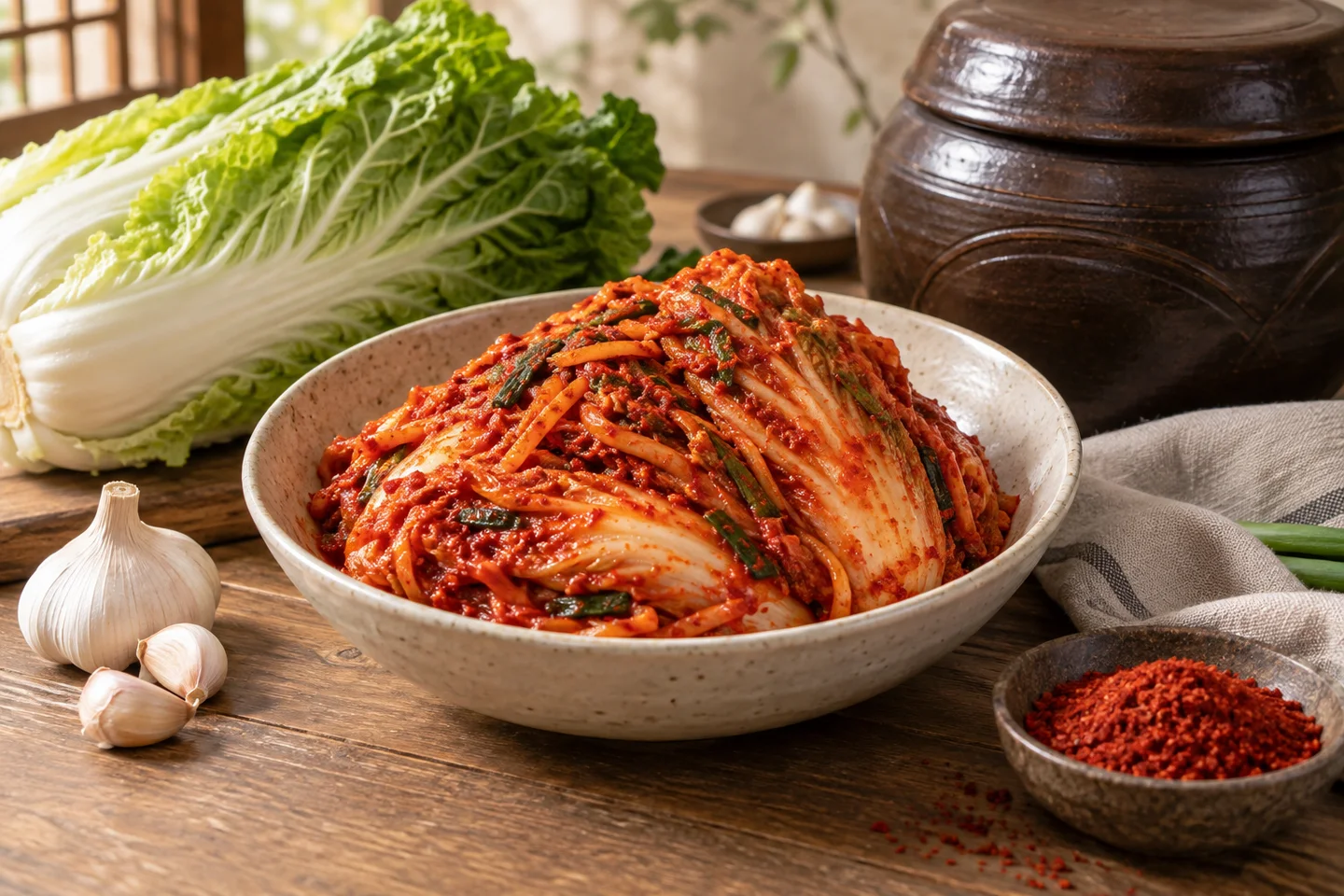
Napa Cabbage Kimchi
배추김치Salted napa cabbage leaves are layered with seasoned radish. Crisp white stems and tender leaves make each bite a little different.
How to make it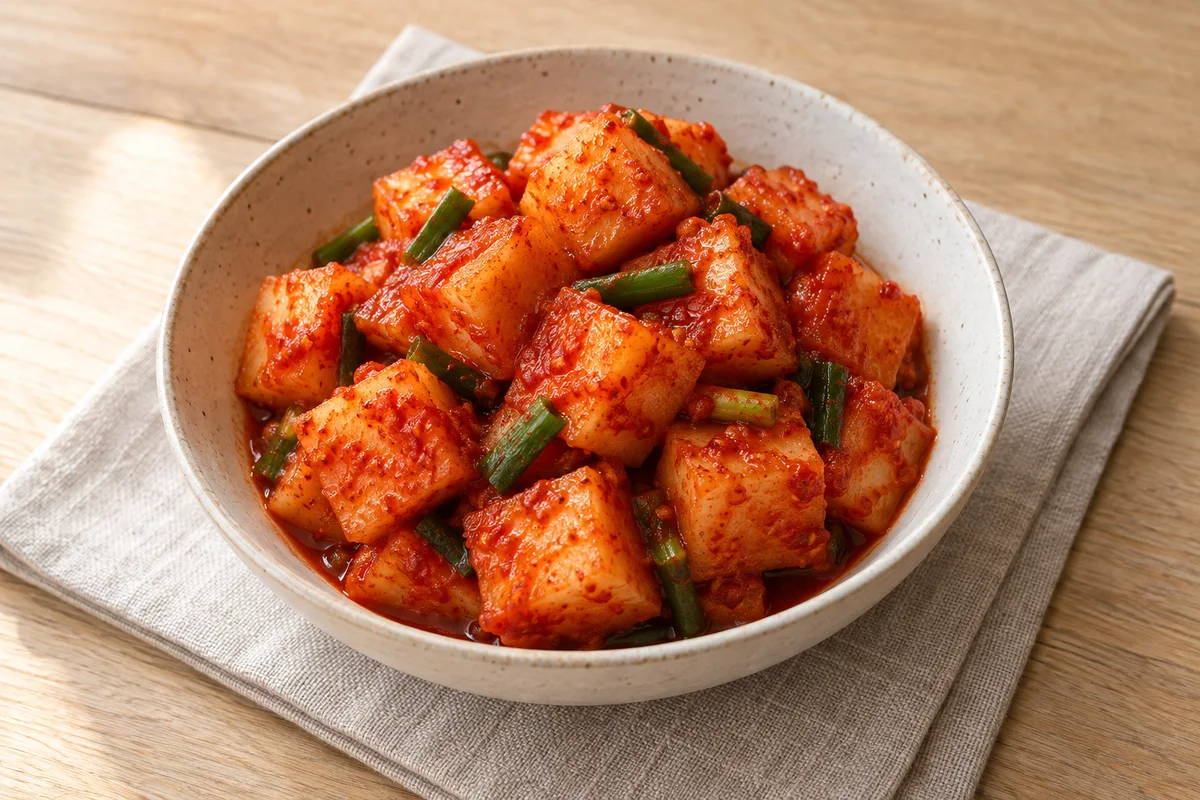
Autumn
Cubed Radish Kimchi
깍두기Bite-size radish cubes bring a juicy crunch and a gentle sweetness beneath the red pepper seasoning. A familiar companion to Korean soups.
How to make it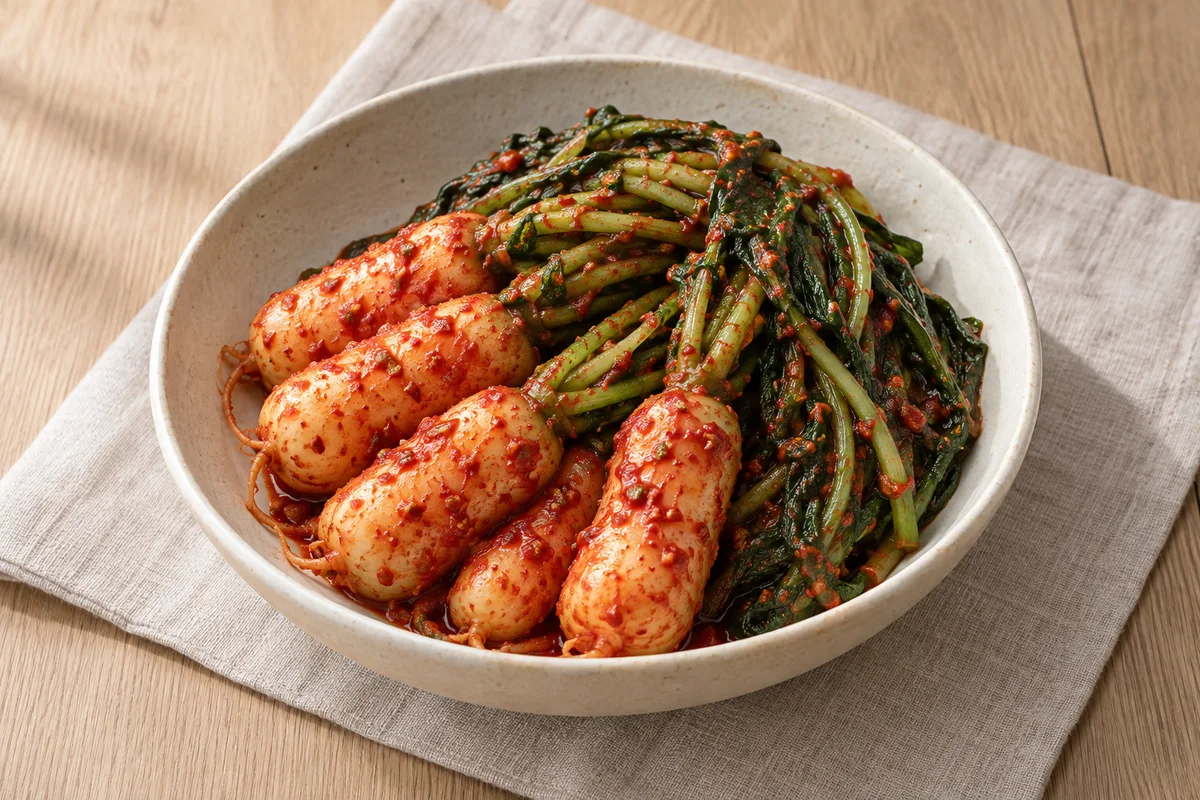
Autumn
Ponytail Radish Kimchi
총각김치Small ponytail radishes are kept with their leafy tops. The firm roots and chewy greens offer two textures in one kimchi.
How to make it