IN NATURE
Changes in nature
Grain and fruit harvests gather pace, and autumn colors become more noticeable.
Autumn / 18 OF 24
Autumn Equinox
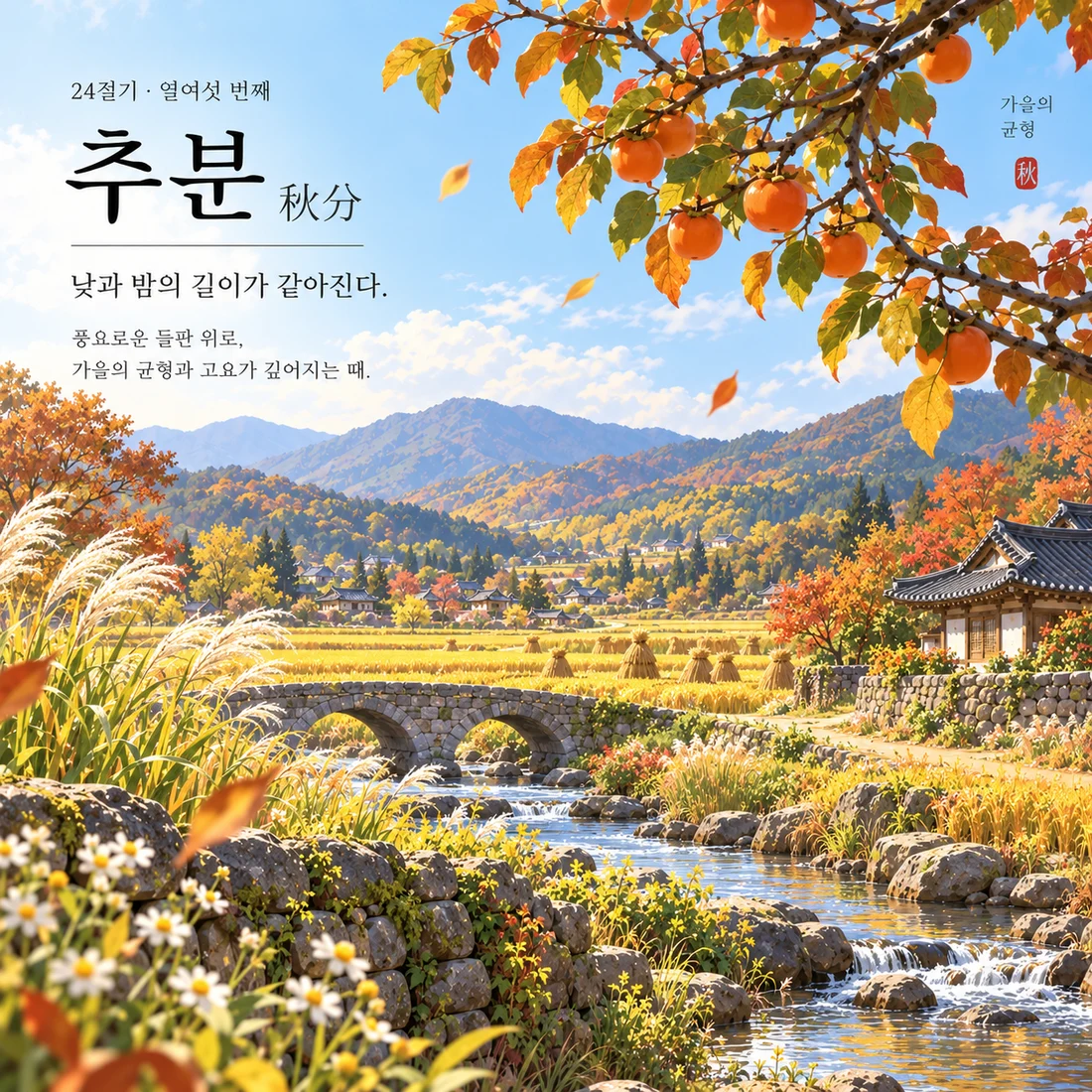 Solar term illustration coming soon추분 · 秋分
Day and night are roughly balanced. Afterwards, nights gradually lengthen in the Northern Hemisphere.
A seasonal basket for your tableIN NATURE
Grain and fruit harvests gather pace, and autumn colors become more noticeable.
SEASONAL WEATHER
Mornings and evenings tend to cool, and the day-to-night temperature range can widen. Warm afternoons and rain can still occur.
These are general seasonal patterns in Korea, not live weather or a forecast. Conditions vary by region and year.
A SEASONAL BASKET
Share crisp, juicy slices as a refreshing finish to a meal.
Add shiitake or oyster mushrooms to rice and soup for savory depth.
Remove the seeds and steam or roast for mellow sweetness.
Scrub well, then steam or roast for an easy accompaniment.
Suggestions reflect typical harvest and eating seasons in Korea. Availability varies with the region and growing method.
AT YOUR TABLE
These dishes are ideas for making the most of seasonal ingredients.
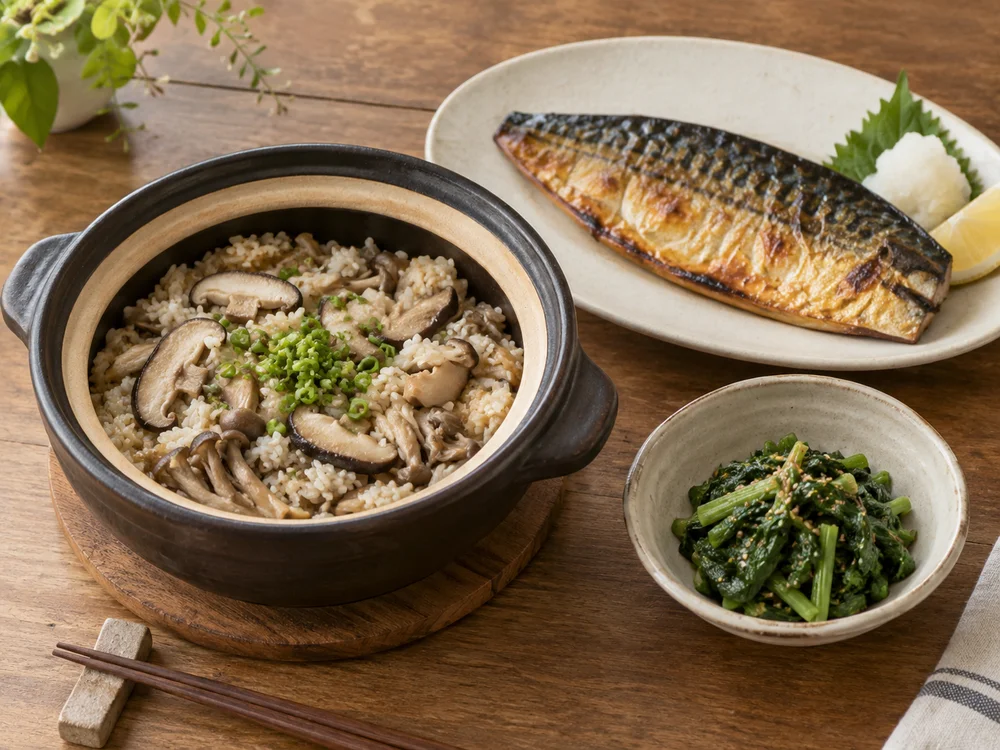
Cook mushrooms over rice to bring earthy autumn flavors into one comforting bowl.
See cooking idea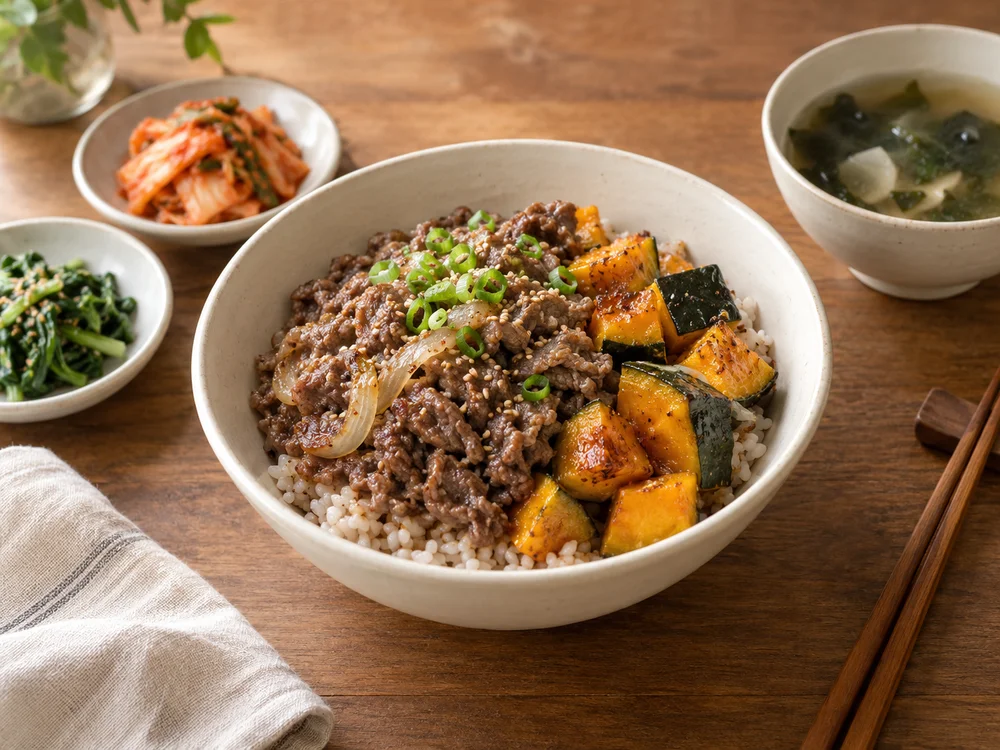
Mellow squash sweetness pairs with beef for a satisfying rice bowl.
See cooking ideaLIVING WELL
Wear light layers for changing morning and evening temperatures. Take an easy walk when conditions feel comfortable.
HOME RITUALS
Dry summer bedding thoroughly before storing it and bring out a light quilt. Move ingredients to use soon to the front of the fridge.
COOK WITH THE SEASON
About 45 min
Mushrooms / Spring onion
Combine shiitake and oyster mushrooms for varied texture. Serve a spring-onion soy dressing separately so each person can season their bowl.
About 30 min
Kabocha squash
Cook the seeded squash ahead for convenience. Pair it with cooked beef and onion over rice.
A LITTLE MORE TO KNOW
Solar terms follow the position of the Sun, so their calendar dates can shift by about a day from year to year. This page uses Korean dates for the year shown.
Solar terms are a traditional guide to the seasons. The weather described here is a general seasonal pattern, not live observations or a forecast. Actual conditions vary by region and year.
Start with an ingredient on this page that is fresh and available near you. Harvest times vary with location and growing methods.
Solar term dates vary by year. All dates shown use Asia/Seoul time.
Calendar reference: Korea Astronomy and Space Science Institute. Dates use Korean Standard Time; food and living suggestions are seasonal examples.