Kimchi Stories
Baechu kimchi through the seasons
Napa cabbage kimchi is not just a winter food. Adjust your batch and your meal to the ingredients and your household.
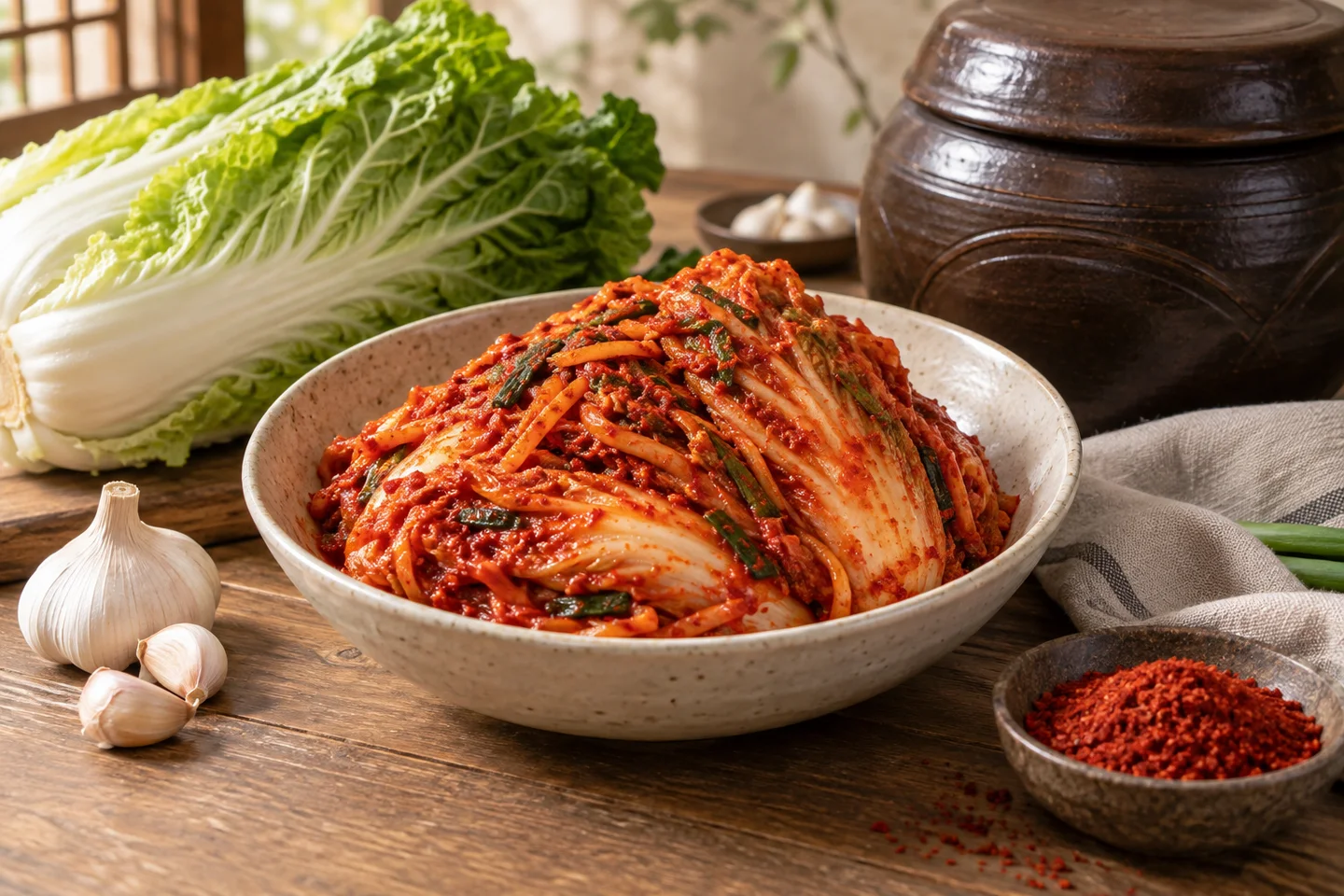
Baechu Kimchi means Napa Cabbage Kimchi. Even the familiar red-seasoned version varies in flavor between kitchens. Rather than searching for one universally correct taste, begin with how much your household will make and the meals you want to serve it with.
Look at the cabbage before the calendar
Cabbages differ in size and moisture. Inspect for damaged or soft leaves, and use weight as well as head count when following a recipe. An image of autumn kimjang cabbage is not a substitute for checking the vegetable actually in front of you.
Why smaller containers can help
Serving from smaller containers reduces repeated handling of the main batch. Mark preparation dates, use clean utensils and follow refrigeration guidance. Smell alone cannot establish safety; do not eat kimchi with uncertain storage history or concerning changes.
There are mild options too
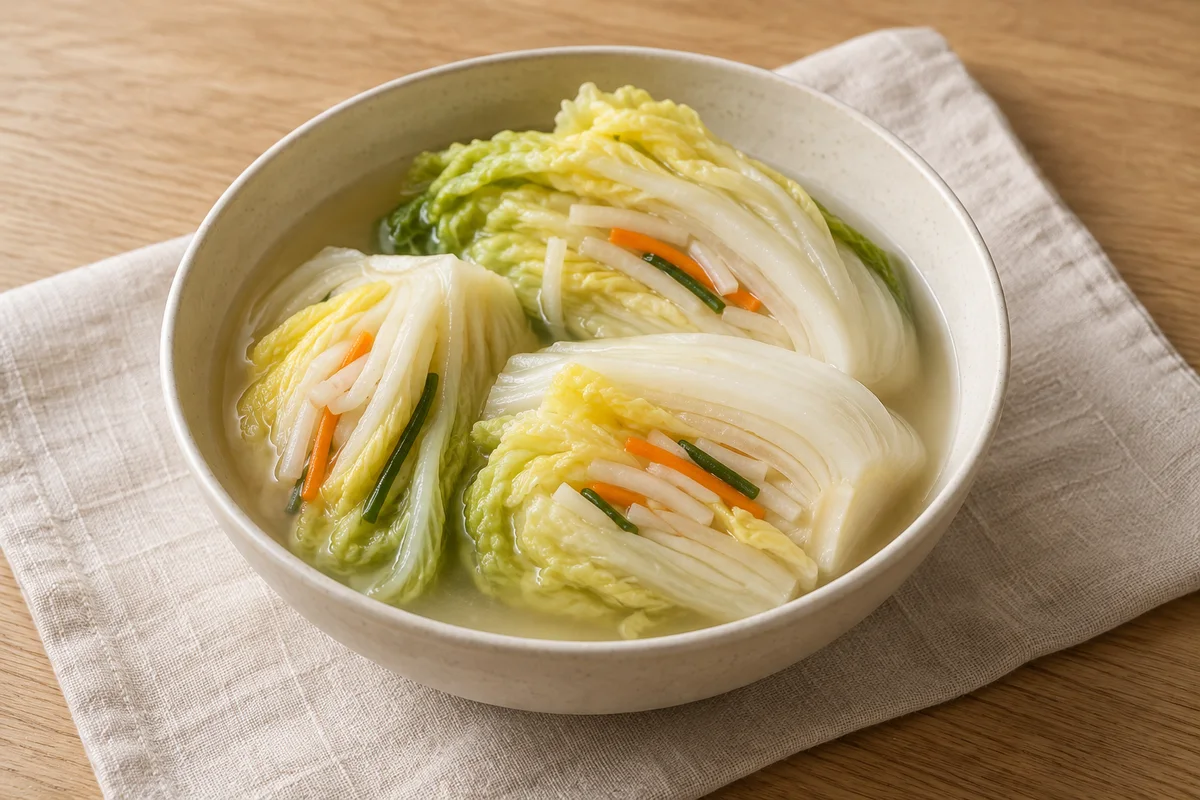
Baek Kimchi offers a different expression of cabbage kimchi without red pepper powder. Simply removing chili from another recipe does not reproduce its balance. Start with a dedicated white-kimchi recipe to learn its liquid and seasoning proportions.
Put it into practice
- Choose a batch size after checking cabbage weight and refrigerator space.
- Choose either red napa kimchi or white kimchi as a complete recipe.
- Serve only what you need and keep a date label.
Food to make next
Related solar terms
Kimchi to explore
Continue exploring
Frequently asked questions
Is baechu kimchi made only in winter?
No. It can be made when cabbage is available, with attention to ingredients and storage conditions.
Is white kimchi just red kimchi without chili?
Its liquid and seasoning balance differ; follow a white-kimchi recipe.
Can every sour kimchi be used in cooking?
No. Normal souring differs from spoilage. Cooking is not a way to rescue mishandled or suspicious kimchi.