Kimchi Stories
What is Kimjang? Making and sharing a winter staple
Kimjang is about more than the finished kimchi: preparation, shared work and giving are part of the story.
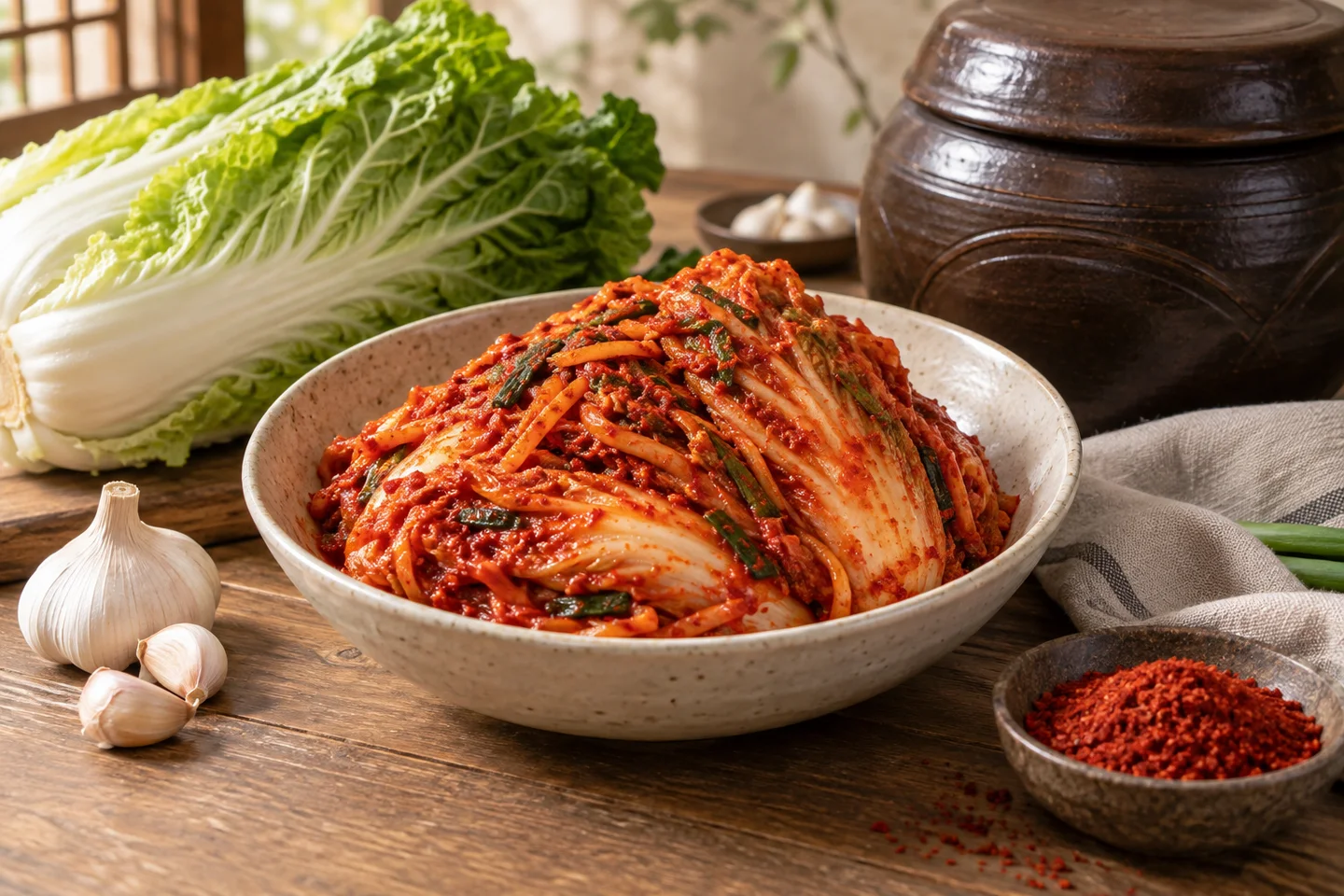
Kimjang is the Korean practice of preparing and sharing kimchi for winter. UNESCO inscribed Kimjang in the Republic of Korea on its Representative List of Intangible Cultural Heritage in 2013. At home today, a small shared batch can offer a practical introduction without reproducing a large community event.
How is Kimjang different from an everyday batch?
Kimjang has a seasonal and communal context, often associated with late autumn. Kimchi itself can be made throughout the year with different vegetables. Households do not all prepare it on one date or in the same quantity.
Divide the work before you begin
Begin by understanding washing, salting, seasoning and packing. Use the quantities in the napa cabbage kimchi guide and assign manageable tasks. While the cabbage salts, prepare the next tools so the kitchen does not become crowded.
What to include when sharing
Label shared containers with the preparation date and ingredients, including fish sauce or salted shrimp where used. Fermentation and storage depend on temperature, batch size and recipe; do not promise a universal room-temperature schedule. Share the relevant storage guide too.
Put it into practice
- Choose one recipe and check its batch quantities.
- Share ingredient preparation and workspace organization.
- Label the finished containers and pass on storage guidance.
Food to make next
Related solar terms
Kimchi to explore
Continue exploring
Frequently asked questions
Is Kimjang only napa cabbage kimchi?
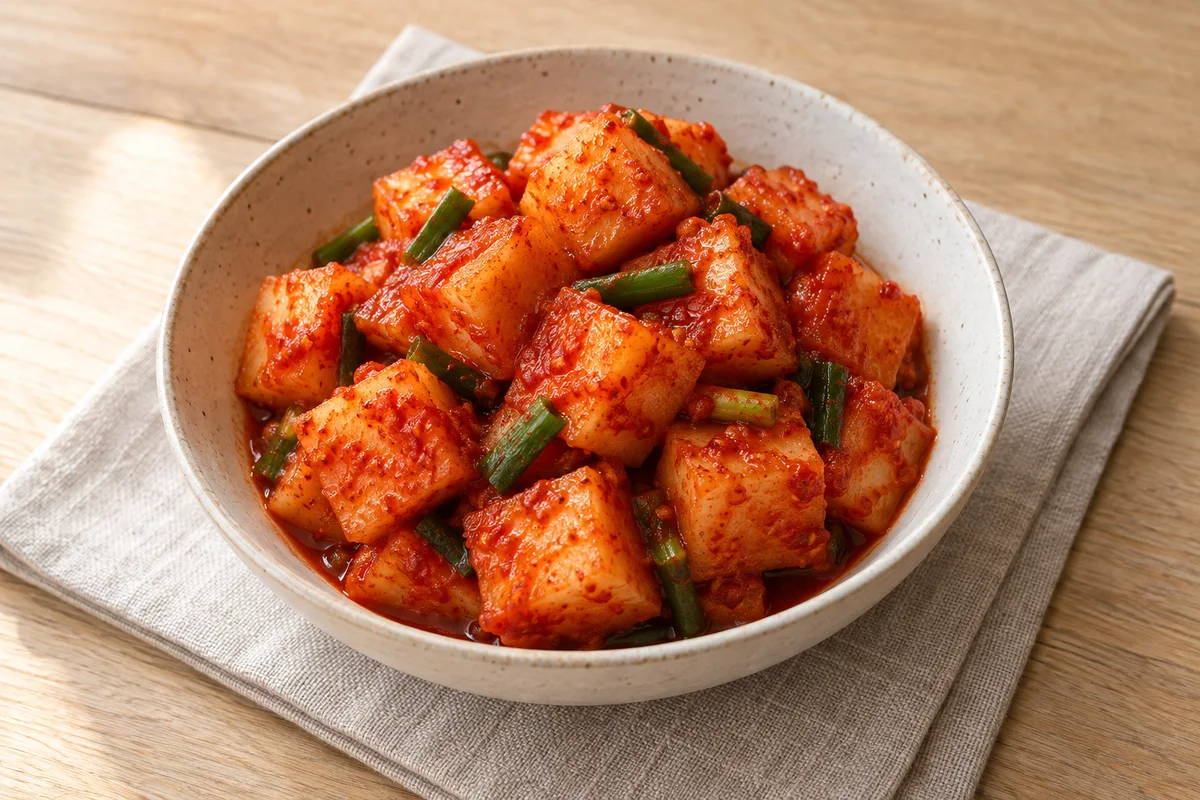
Napa cabbage kimchi is well known, but radish kimchi and other preparations vary by household and region.
Can one person try a small batch?
Yes. Start with a small recipe suited to your refrigerator space and needs.
What exactly did UNESCO recognize?
The practice of making and sharing kimchi, rather than one commercial product. See the UNESCO source below.